FOUNDATIONAL LEAD 2026
Gaddr Jobs — The system,
and the screens themselves.
Led design-ops and governance across the Gaddr suite, and shipped the end-to-end recruiter flow myself.
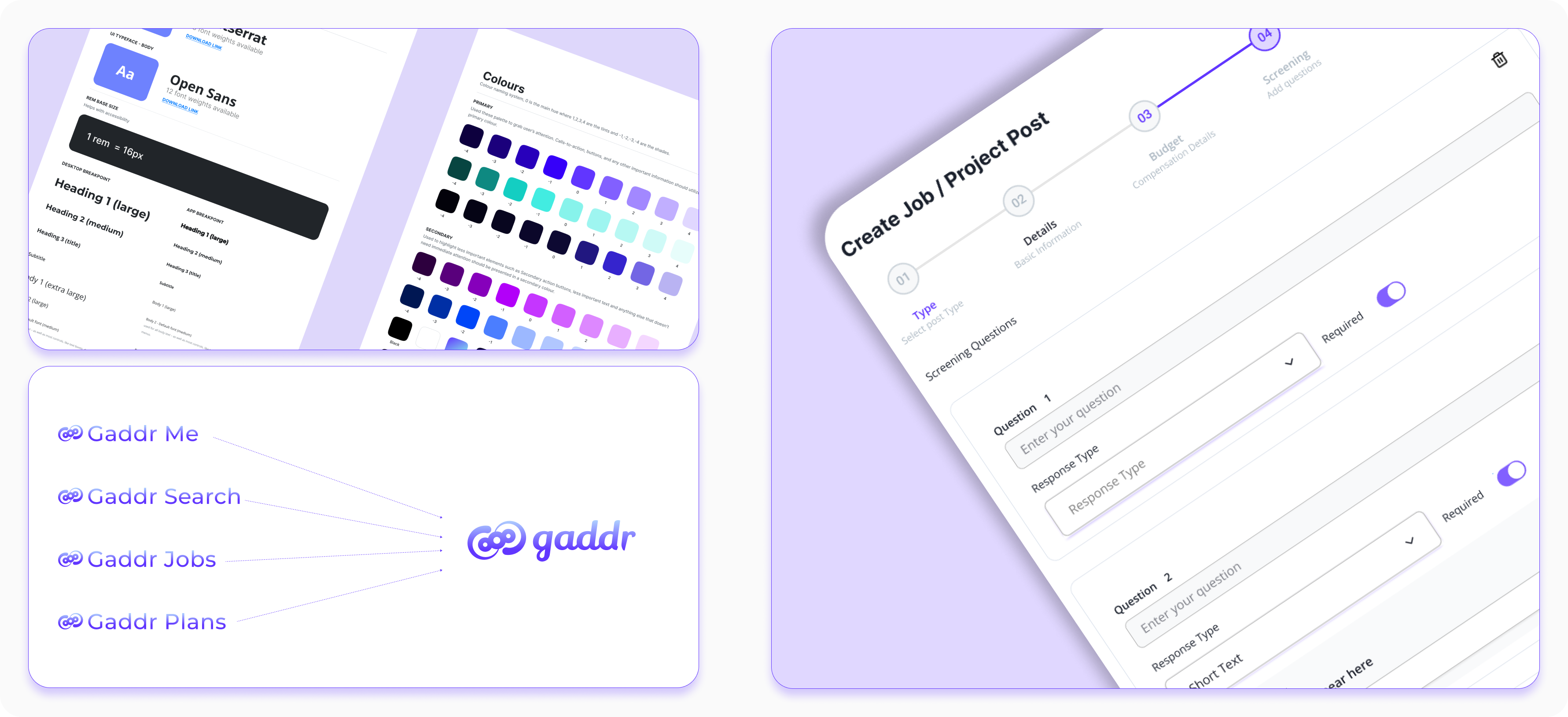
01 · The Context
Turned a fragmented, siloed workflow into a shared system — and a dead ClickUp into the team's operational tool.
When I joined Gaddr, the mission was to simplify digital life through an intelligent platform that unified identities and workflows. We were transforming a standalone tool called Flowerwork into an integrated suite: Gaddr Plans and Gaddr Jobs.
This was the team's first shared mandate, not a solo lead role: together with my fellow designers, our goal was to unify the platforms into a single design system, connected through the Gaddr Me universal profile. The Lead Designer title came later, as I took ownership of Gaddr Jobs and reshaped how the team worked to get there.
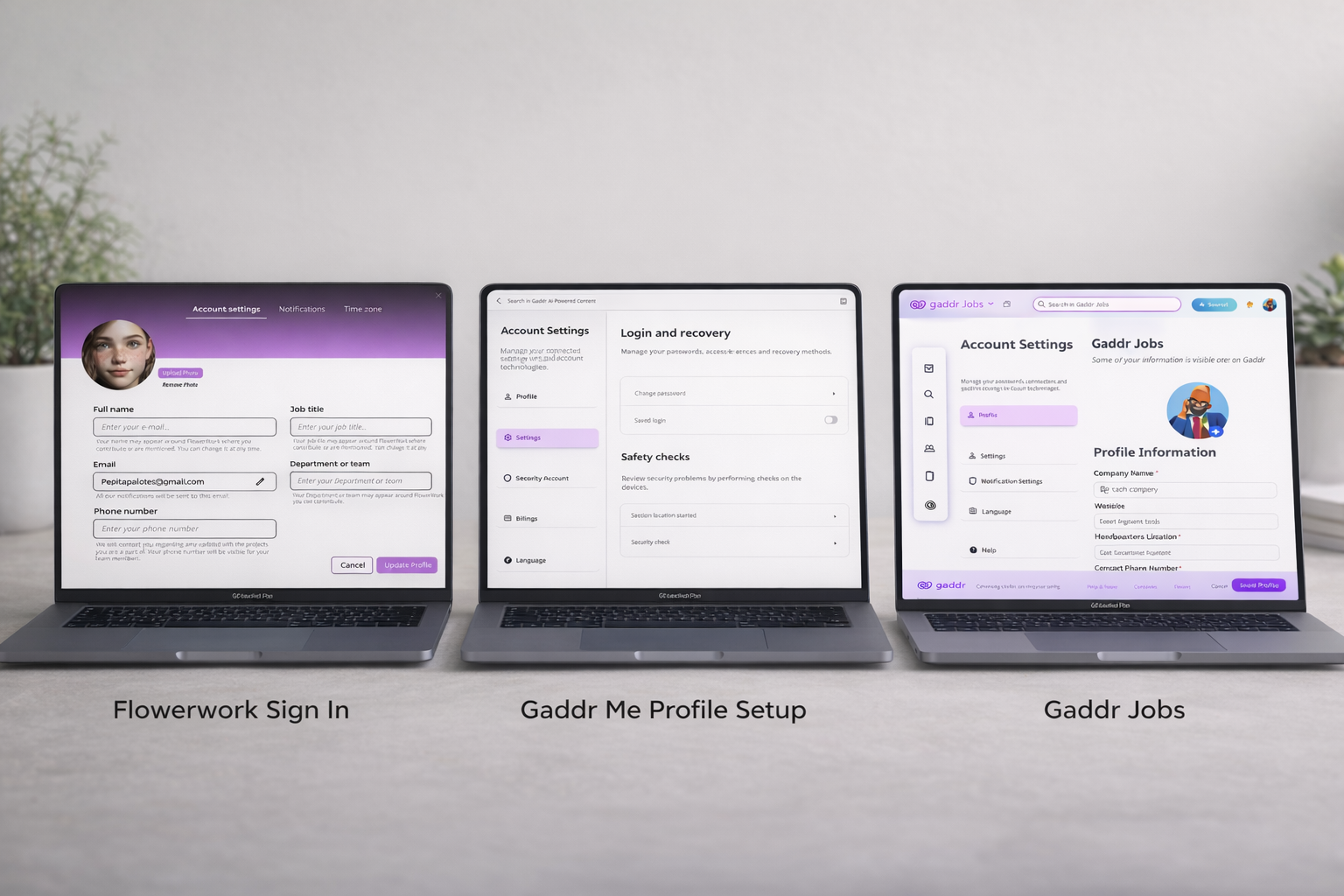
The Evolution: From the independent 'Flowerwork' app to the unified Gaddr Suite.
02 · The Challenge
Scaling culture before scaling the product
The main challenge was fragmentation. The team worked in silos and the design-to-dev handoff was highly inefficient — tasks lived in a ClickUp that nobody opened. My role quickly shifted from pure execution to strategic team enablement.
"I didn't just design screens — I designed how we worked. My role shifted from execution to enablement."
03 · The Architecture
From Chaos to System
I established a Governance Model that standardized naming conventions and file structures. We prioritized usability and scalability, enabling the team to assemble systems rather than just drawing isolated screens.
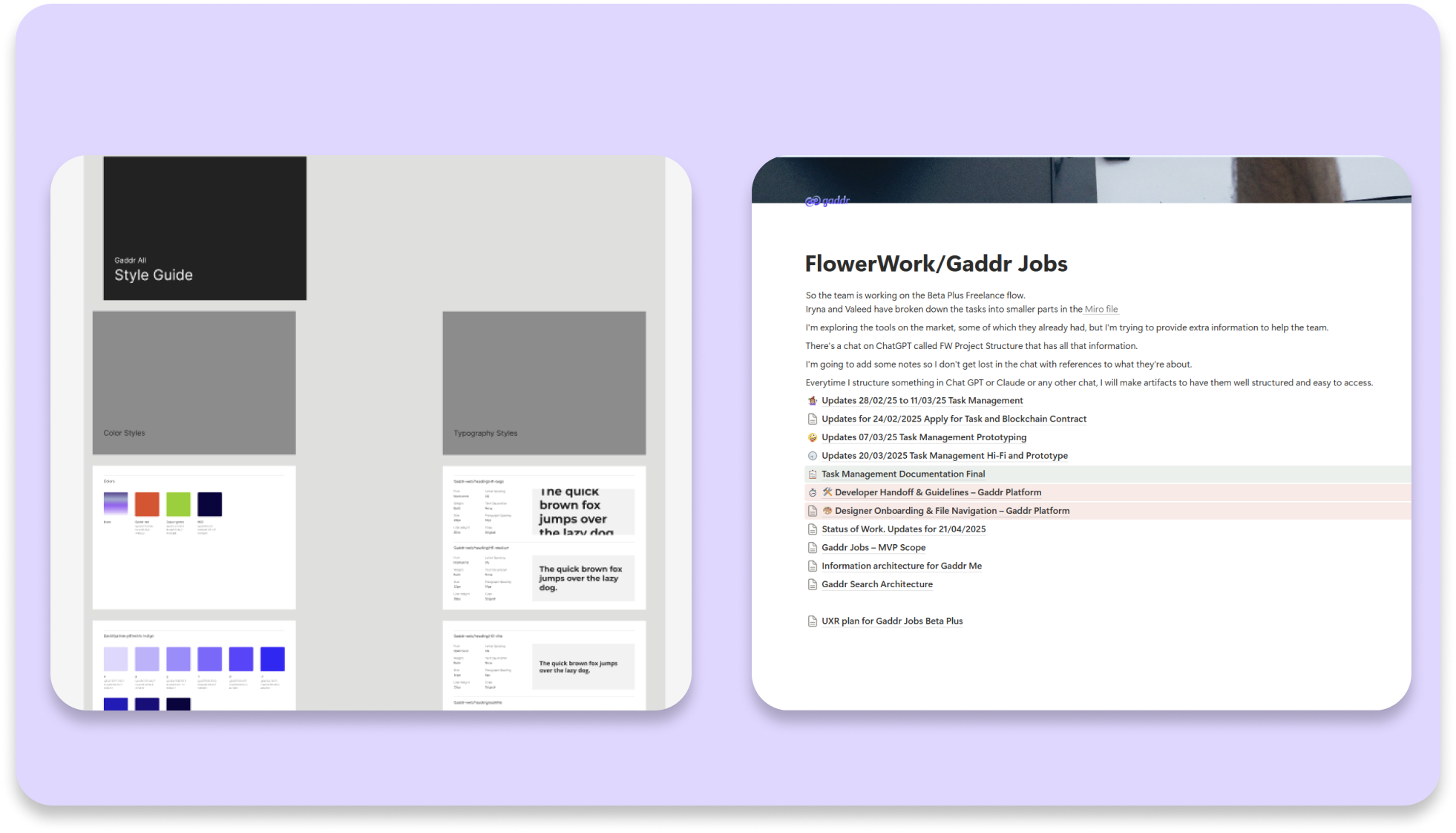
The Governance: Establishing clear style guides and onboarding documentation for the team.
System Synchronization
I audited Gaddr Me to create a cohesive component library for Gaddr Jobs, ensuring a seamless and universal experience.
Semantic Tokens
We implemented Figma Variables to manage themes and spacing mathematically, ensuring systematic consistency across the entire ecosystem.
04 · My Core Craft
Hands-on UI: The Recruiter Flow
Governance and team enablement weren't a substitute for craft — I kept both running at once. While leading the system-wide work, I personally designed the end-to-end job creation flow for recruiters, applying progressive disclosure to reduce cognitive load in data-heavy processes.
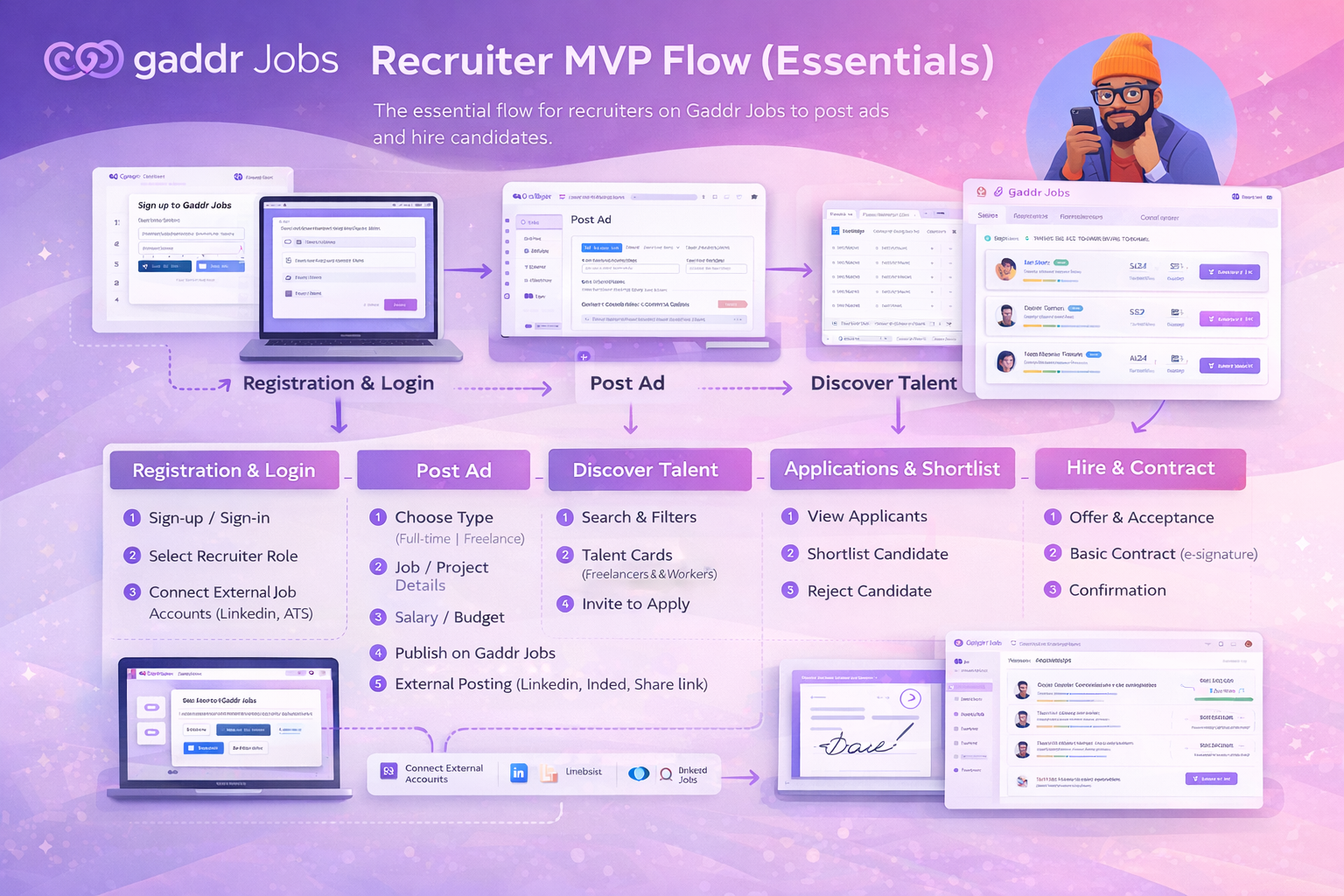
The Final Recruiter Flow: Clean, simple, and scalable within the Gaddr suite.
05 · Product Strategy
Adapting to Business Constraints
Given the complexity of AI and the tight MVP deadlines, we decided to pivot and focus on a high-quality, stable core experience. We prioritized meaningful outcomes over feature quantity.
06 · Research Leadership
Governance for AI & Future Steps
AI stayed out of the MVP — but I left the ground ready for it. I defined the Research Governance framework for future AI integration, ensuring the product is 'future-proof' and ready to automate tasks and provide intelligent insights based on validated user needs.
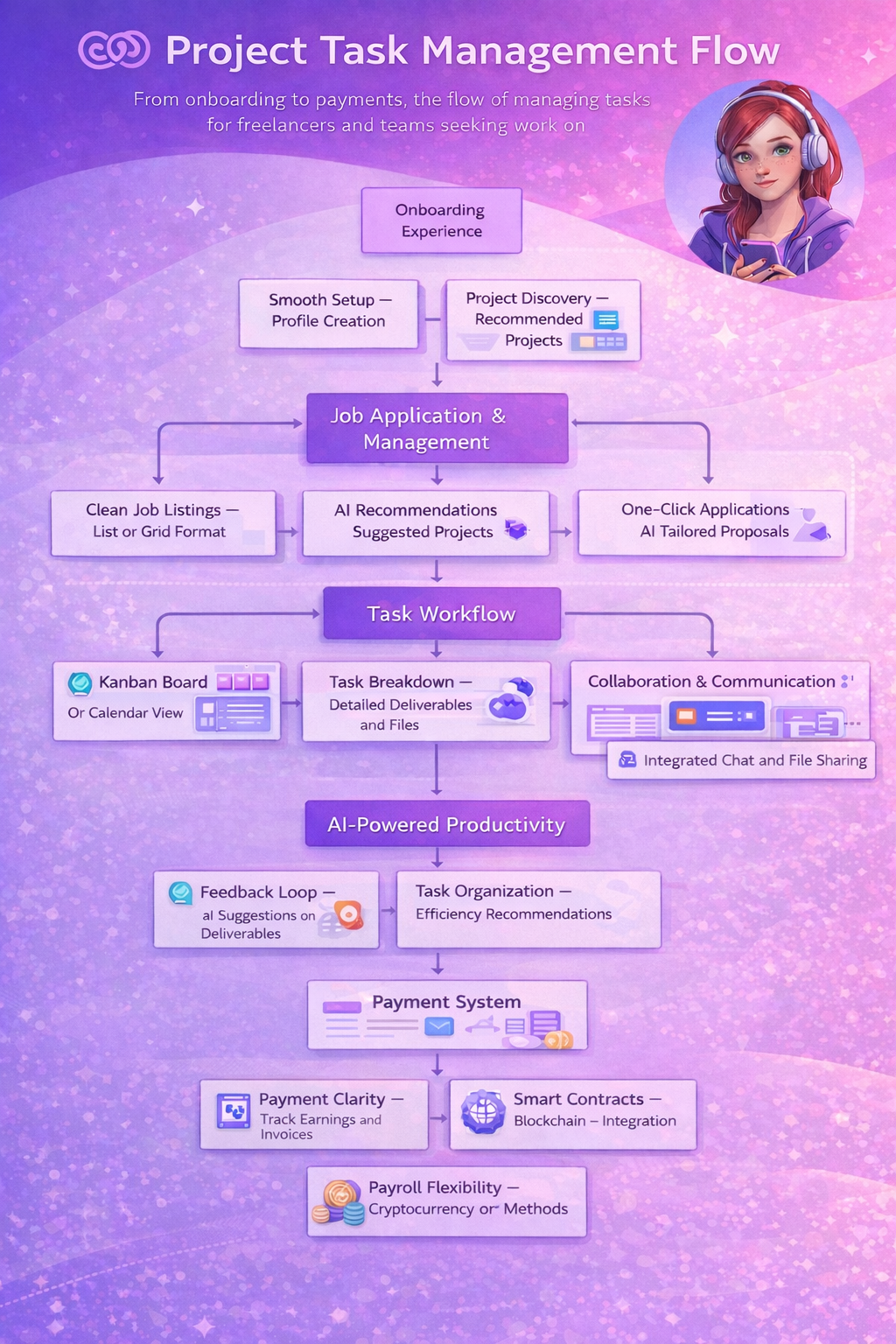
Future Vision: The AI-assisted job seeker journey: Integrating intelligent project discovery and seamless task automation.
07 · Outcome
The bottleneck was design-to-dev handoff: siloed work and a ClickUp nobody opened. Success wasn't 'a cleaner design system' — it was lower handoff friction, without letting consistency degrade as we moved faster.
I moved on before adoption data matured, so this isn't a KPI story. What I can show is how the team's way of working changed — and what I left instrumented to measure it.
- Adoption — the signal that mattered. ClickUp went from abandoned to the team's operational tool for both designers and developers.
- Cross-functional clarity. PMs with no UX background began planning and triaging design tasks correctly, and the questions routed directly to me dropped — a sign the system had started answering for itself.
- Guardrail · consistency. I set up naming/governance and assigned an owner to standardize existing components and curb snowflakes and detached instances. A partial win: the move from a single style-guide page toward a shared design system was set in motion, not finished.
"Clear flows before clever tools."
Only when the foundations are solid can technology effectively simplify digital life.