PRODUCT DEFINITION 2025
Hygea — From mop to metric:
making invisible work visible.
Digitizing Spain's cleaning industry through mobile & smartwatch
I worked as UX Researcher
01 · The Reality
Spain's professional cleaning industry is vast — yet behind the scenes, most of its workforce remains invisible to digital tools. Between outdated systems, manual reporting and limited tech literacy, what should be efficiency often becomes friction.
"Still registering on paper. I wish I could use the app on my phone." — Cleaning staff
02 · The Disconnect
Everyone wanted efficiency — but not everyone wanted transparency.
"Planning is subjective. The shift manager plans based on their knowledge, which may not be accurate."
"Connection problems and the app crashes a lot. Also, the assigned routes don't make sense."
"My work isn't reflected. Nobody knows how much I work. Time is running out and the logging system slows me down."
03 · Designed for Reality
Large. Bold. Hands-free.
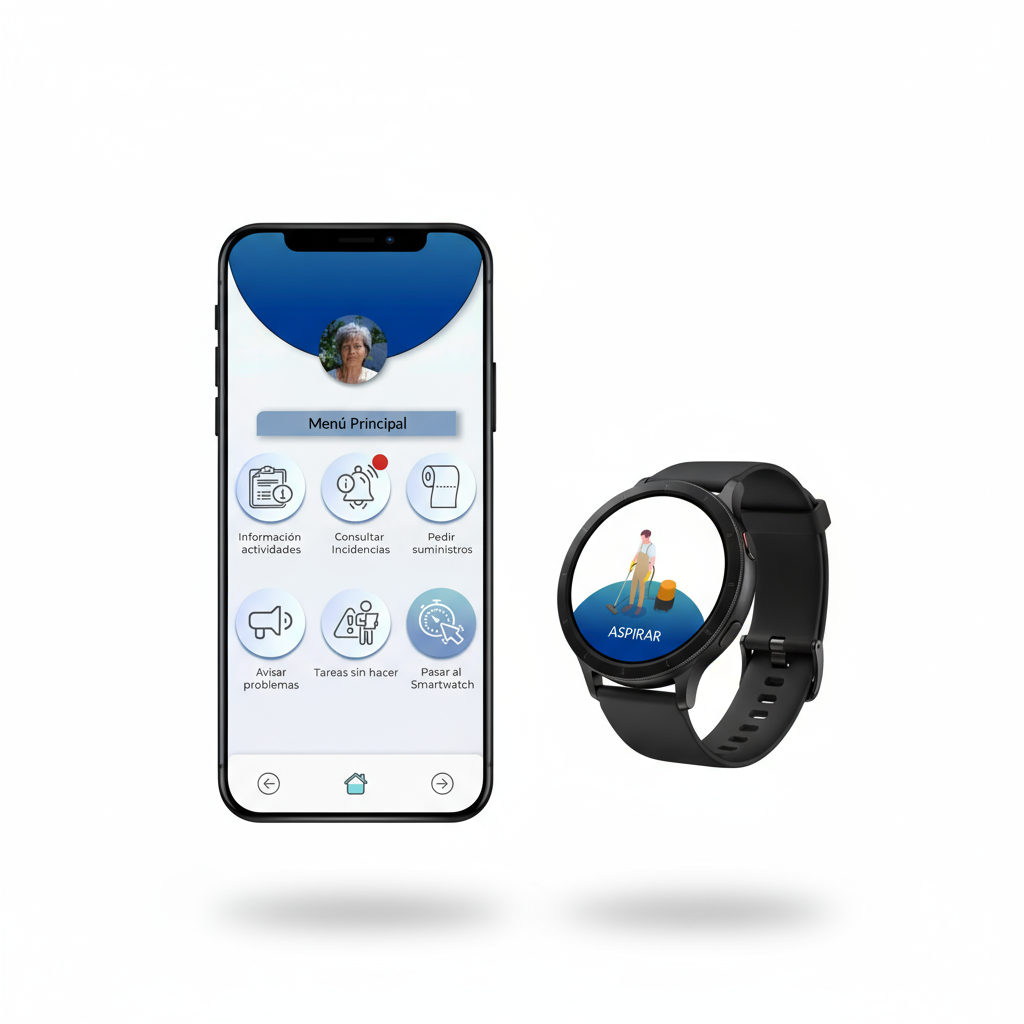
UI for tired eyes. No typing required. Smartwatch for wet hands.
Hygea's interface was designed to meet users where they are — in motion, in noise, and often with limited visibility. Our goal: make the tool invisible, and the work visible.
04 · Accessibility First
In professional cleaning, many workers are over 45. Vision issues, limited digital experience, and stress from multitasking make traditional apps unusable in real environments. Accessibility wasn't an extra — it was the foundation.
I began with contrast, clarity, and context: strong colour contrast for visibility under artificial light, font sizes legible on Samsung Watch and mobile, and simplified task feedback using haptic vibration and large tap areas for gloves.
Testing what 'simple' means
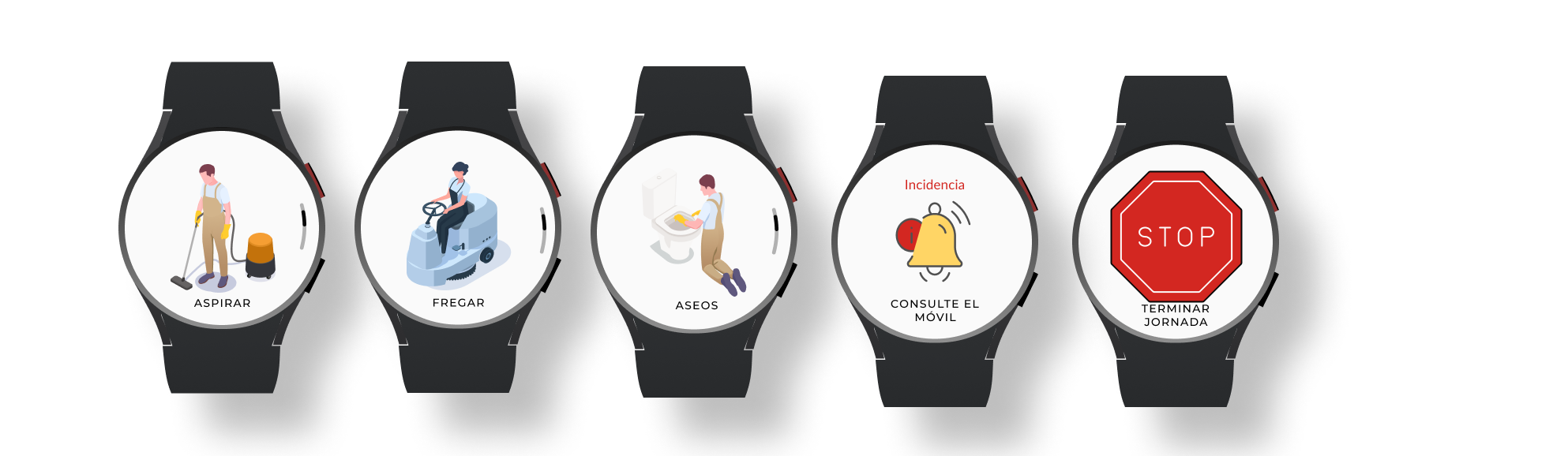
Usability reviews with cleaning supervisors revealed that what seemed "intuitive" to designers wasn't for everyone. After iterations, navigation became flatter, and the main task actions — Start, Pause, Finish — were brought to the watch screen itself, not hidden in menus.
Training and onboarding
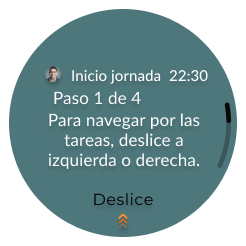
Hygea introduced short tutorials — one minute, no voice-over, simple gestures on the real watch. New cleaners could replay at the start of their shift or skip it if they already knew the flow. Supervisors used it during onboarding. Accessibility wasn't only about the interface; it was about confidence and independence.
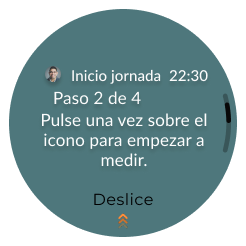
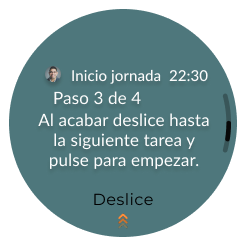
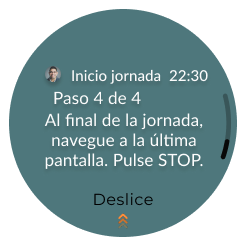
Mari Carmen, Cleaning Team Leader"Now I don't need to look at my phone — just tap the watch. The short tutorials helped us learn fast, and now I can even train the new hires myself."
Accessibility became the bridge between technology and people — a design choice that earned trust.
05 · Pilot-ready MVP
Design that de-risked implementation — even without a rollout.
Scope & constraints — This project did not reach deployment. My role covered UX research, flows, and a clickable MVP to support funding. No production metrics were generated.
What we built
- A watch-first task flow (Start · Pause · Finish) with haptics and large tap areas.
- One-gesture incident logging (supplies, blocked areas, safety).
- A simplified mobile view for setup and exceptions.
What we validated
- Cleaners understood the core flow on the watch faster than on mobile.
- Haptics + clear icons reduced the need for text prompts.
- Supervisors could introduce the tool with short, silent tutorials.
Open questions for a real pilot
- Multi-site roaming and offline sync.
- Client-facing reports aligned to existing contracts.
- Device management at scale (updates, loss, replacements).
- Applying AI to generate and refine cleaning routes dynamically, based on real task data, space layouts, and staff performance patterns.
These questions would shape the transition from a validated UX prototype to a scalable product. The next step was not only technical — it was about turning insight into operational intelligence.